All the hoists provided by the Workshop Equipment Store come with complete installation instructions. We also can recommend hoist installation specialists who can install your hoist for you.
There are several things to consider before installing a vehicle hoist. How you place and install the vehicle hoist will depend on what you plan to use the hoist for. If you are considering a two-post hoist, a good starting point is to determine the largest vehicle you will be working on and place the lift columns based on this.
Drive this type of vehicle into the area where you plan to use the hoist. Carefully look at the space available around the vehicle for walking space and space for tool cabinets, equipment and other items that will be used during servicing. The position of the lift columns should be based on the largest vehicle you plan to work on, and anything smaller will be able to fit.
If placing the hoist in a garage work bay, centre the columns 3 to 4 metres from the wall should provide enough workspace in front of the vehicle.
Hoist columns can be installed close to walls, as little as 70 cm, if there is limited space.
Electrical connection
How you will connect to electricity is another important consideration when planning where you will put the hoist. Thinking about this in advance can save you time in the long run. For commercial workshops using 2-post lifts, it’s common to have the power unit on the passenger door side. This enables the operator to position the vehicle, get out of the vehicle and set the arms on the driver’s side. Then the operator can walk over to the passenger side, set arms on that side, and use the power unit to raise the hoist while still on the passenger side of the vehicle.
In most cases, a single phase 240 volt connect is used for 2-post hoists.
Depending on the 2-post hoist you will be installing, the concrete should be between 15cm and 20cm thick.
Installation
If installing the lift without outside help, consider that it’s a heavy item and won’t be easy to pick up and move around. Having a hand truck or moving dolly will make it easier to move the components.
Each hoist comes with installation instructions. Completely read these instructions before starting assembly. Assemble the lift near the installation area to avoid moving heavy items after they have been assembled.
Once most of the hoist is assembled, ensure that the floor is clearly marked so that when you raise the hoist to install (using lifting equipment) you will be near the installation mark.
Be careful when drilling holes in concrete and use the correct tools and PPE to prevent accidents. Drill to the required depth and make sure you use the correct hardware to secure the hoist to the concrete.
The services of a qualified electrician might be required to complete the installation by connecting power to your hoist.
All Workshop Equipment Store hoists and lifts are designed for safe operation and conform to Australian standards are WorkSafe VIC approved. The instructions provided have been created to promote safe installation and operation. If you have any questions about installation and operation, please contact The Workshop Equipment Store.
Answers to your questions
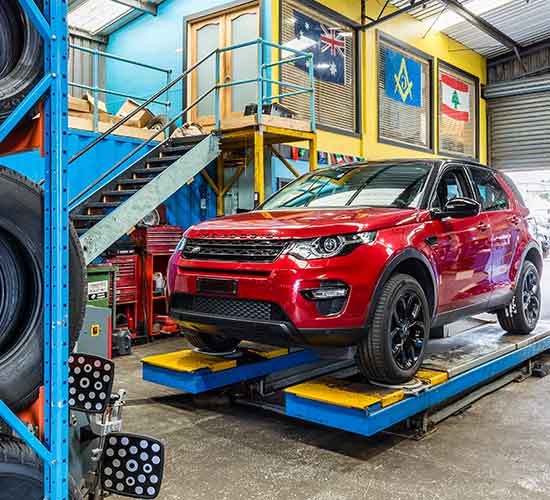
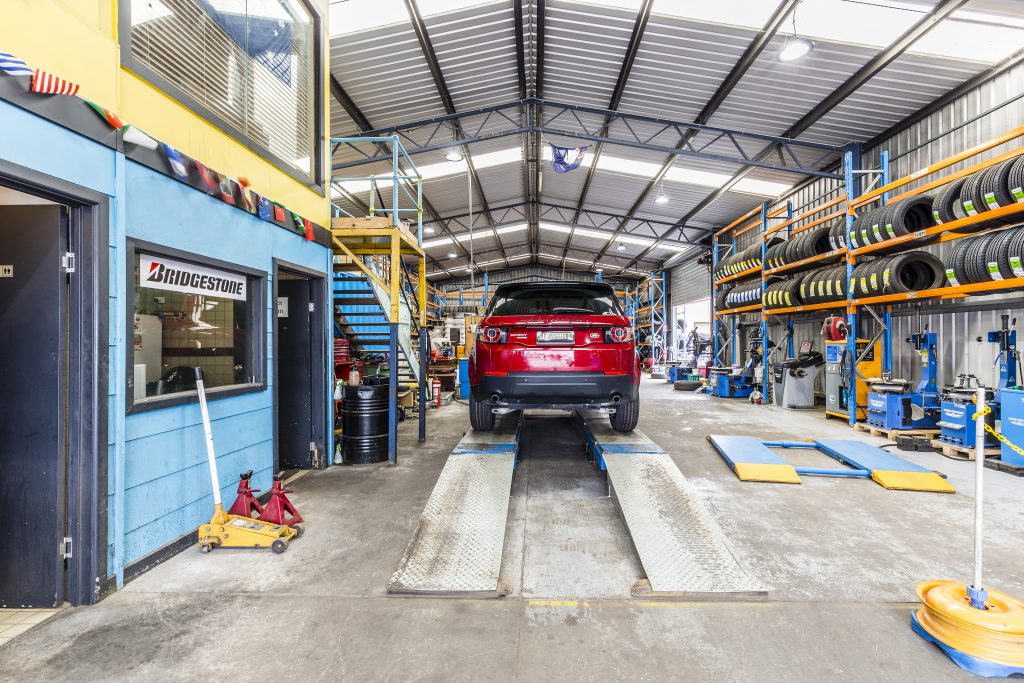
We’re happy to answer any questions about selecting and installing a two-post hoist, whether for business or personal use. We can recommend experienced and qualified installers to simplify the process. Also, if you want to see our two-post hoists in operation, we invite you to visit our tyre installation workshop in Craigieburn, Victoria.
Choosing the right vehicle hoist (also called lift) for your needs and circumstances is essential to ensure you get the most out of this piece of equipment. A range of hoists will suit different circumstances and needs. Here we compare the options and look at the pros and cons of each.
Two-Post Hoists
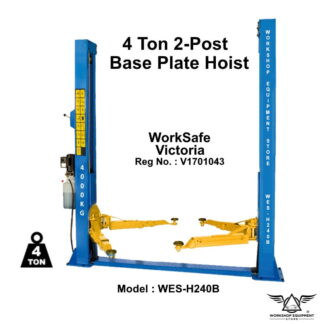
2-post hoists are one of the most common types of car hoists available. They consist of two sturdy posts and stabilisations arms for support and are a cost-effective choice for small workshops with limited space. They can be raised to 1.8 metres and can handle of up to 4-ton vehicles.
The two types of two-post hoists include clear floor and base plate models. The clear floor models have the hydraulic hose and cables running through the bar at the top of the lift, while these are found at the bottom running through a plate on the floor plate model. Both models need a 15cm to 20cm of concrete to be installed properly and safely. This includes drilling into the concrete and fastening the posts.
The bar at the top of the clear floor model makes it unsuitable for some high vehicles. At the same time, having a clear floor underneath makes it easier to position vehicles and move around when the vehicle has been raised.
Two-post hoists take up less space and are perfect for servicing lighter vehicles. For bigger garages that service trucks and other large vehicles, two-post hoists might not be suitable. One point to consider is that time and attention are required to place the arms on the correct lifting points under the vehicle.
Two-post hoists are suitable for many types of vehicle servicing where you need access underneath the vehicle, such as transmission, exhaust and engine servicing.
Pros:
Easily access all parts of vehicles, including wheel assemblies
Without a base, you have a very low lifting point
Cons:
Unlike a portable scissor lift, it needs to be bolted to a concrete floor
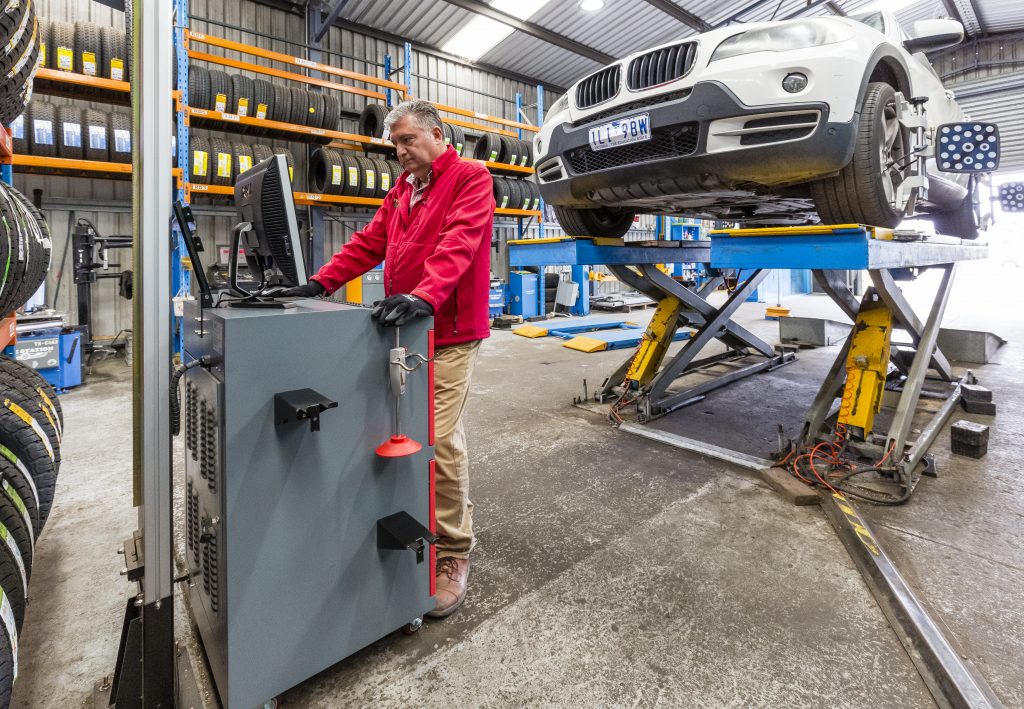
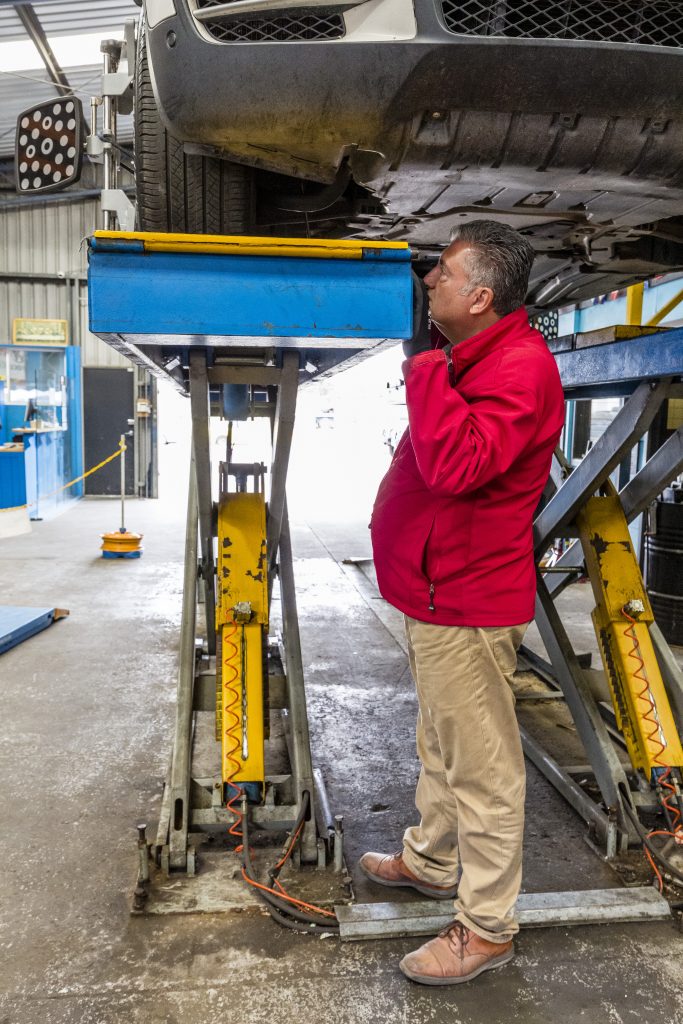
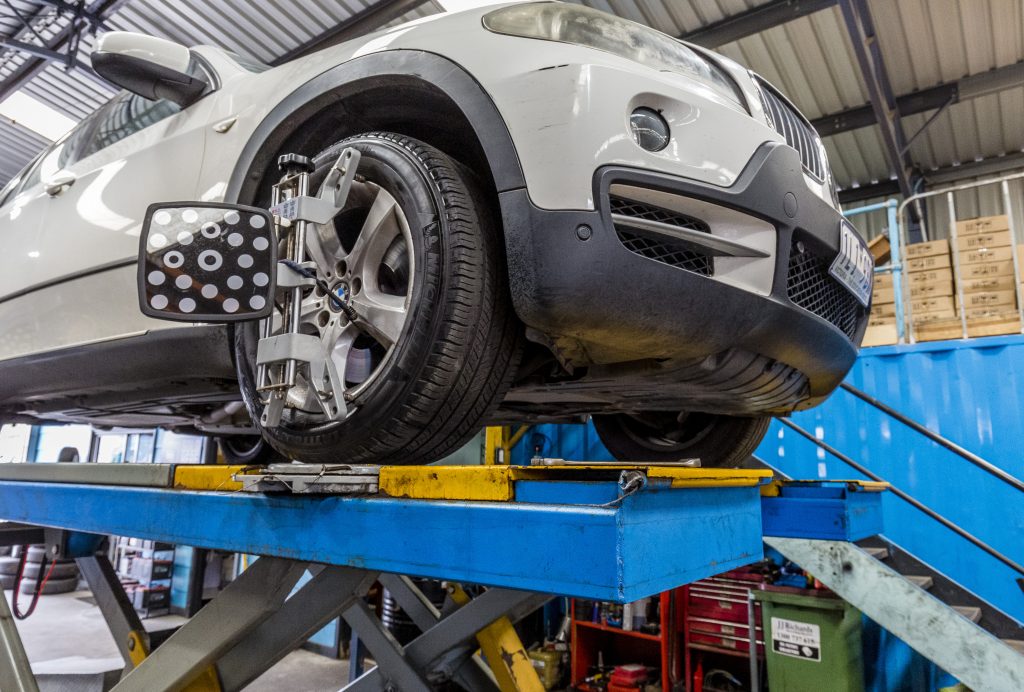
Scissor lifts are a lower profile alternative to two-post hoists. They are highly versatile and suitable for professional workshops that provide a range of services, including exhaust system repair and wheel alignment. Since there are no pillars (as found in a two-post hoist), it’s easier to access vehicle underbodies from all sides. The weight capacity of scissor lifts ranges from 2.8 to 3.5 tonnes. Scissor lifts can be installed inground or above. Portable models that can be moved around as needed are also available.
Scissor lifts lie flat when not in use and vehicles are parked over them before being elevated. They don’t take up a lot of space and are easy to use.
They are ideal for brake and wheel work and some under-engine work.
Pros:
It’s smaller and comes in a portable model, so it could be better if space is an issue
Can be used outdoors
You can mount the vehicle from the front or rear
Comes in a single piece, so no assembly is required.
Cons:
Less access to the underbody of vehicles compared to 2-post models.
Making a decision between a scissor lift and 2-post hoist
Choosing the right equipment is important for safe and efficient work. We’re happy to discuss your requirements and explain all the options available. We welcome you to visit our workshop in Craigieburn, Victoria to see our car hoists and lifts in operation.
When choosing a car lift or hoist, it’s important to understand the space and other environmental requirements. Here we’ll look at some of these factors when selecting a vehicle lift.
What is the area
required to install a lift?
There is a lot of variation in the sizes of vehicle lifts, so it will depend on what you need to meet your requirements. In general, you need at least 4 metres for the width. In a pinch, you can go down to 3.6 metres wide for some lifts. Remember that you will also need space around the lift to access the vehicle. For example, if the overall width of the lift is 3.4 metres, you will still need extra space to access and work on the vehicle. One of our smaller models, the S-300 portable hydraulic scissor lift, is 1.76 metres wide. But again, you will extra room on the sides to access the lift and the vehicles being serviced.
How much room is
required to install a lift?
Our lifts are delivered in components and need to be assembled. So getting the components into space is usually not an issue. We’ll be happy to discuss the best solution for your space.
What type of car
lift suits particular areas?
A portable scissor lift will be suitable if you have limited space, such as a home garage. A larger scissor lift and 2-post floor hoist will be suitable for a larger space, such as a professional garage or a large home workshop.
You will also need to consider the space required to move the car unto the lift. A portable lift can be moved so is more flexible. With a two-post lift, you will want to consider how vehicles can be driven on to it. If the lift is parallel to the access door, this will not be an issue, as you can easily drive between the posts. If the lift is in a different position, such as perpendicular to the access door, you will need to ensure that there is enough turning room to get the vehicle on to the lift.
How high the
ceiling should be for different kinds of lifts?
Again, this will depend on the lift. One of our smallest models the S-300 scissor lift will suit a location with a low ceiling. Its maximum lifting height is 1 metre, then you have to add the height of the vehicle, which can range from heights range from 1775-1815mm. If servicing taller vehicles, you will need to add the height to the maximum lift height of the hoist. Also consider any accessories on the vehicle, such as antennas which could be damaged if the ceiling is not high enough.
What floor concrete
thickness is needed?
Depending on the
model of the lift, a concrete thickness of between 15cm and 20cm is required.
If you have questions or need more information, we’ll be glad to help you select the car hoist for your space and requirements.
Car hoists are a common form of equipment used by garages and car enthusiasts. Given the potential risk, it’s important to use hoists and lifts correctly and safely. Here we cover some of the basics to operate hoists and lifts safely and effectively.
General
tips for operating car hoists and lifts
Be sure that you know the load limits of your hoist or lift and don’t overload. The capacity can be found in the product documentation and nameplate.
Position the vehicle on the lift or hoist so that the centre of gravity is balanced.
Before lifting, check overhead clearances. Watch out for any attachments, antennas and vehicle signs.
Close the vehicle doors, bonnet and boot. Ensure that no one is inside the vehicle before raising it.
Make sure there are no people within 2 metres of the vehicle before lifting.
Check all components of the lift each day before using.
When working under raised vehicles, wear personal protective equipment (PPE). This includes face protection or goggles to protect from dust, rust and leaking fluids or a hard hat to protect from falling objects.
Placing a vehicle on a lift or hoist
Place the transmission in neutral, turn of the ignition, check for overhead objects (such as radio antennas) and close all doors.
Place pads or adaptors in the correct positions under the contact points recommended.
Before raising the lift, ensure that the automatic chock devices on the runway or drive-on lifts are in position. Make sure permanent blocks are sufficient to prevent the vehicle from moving.
Raise the lift or hoist until the wheels are just off the floor, around 30 cm.
Recheck to make sure that the contact pads and any adaptors are accurately set, and the load is not being placed on vehicle parts that might be damaged.
If the vehicle is not even or appears that it might slip, lower and reposition the vehicle on the lift or hoist.
Watch for conditions that might cause the vehicle’s centre of gravity to shift and cause the vehicle to fall. For instance, before raising a vehicle, remove cargo or load that could move unexpectedly. Also, note that removing or installing parts may cause the centre of gravity to move and the vehicle to become unstable.
Lowering
a vehicle on a lift or hoist
Make sure no
equipment, tools, jacks and other items are under the lift.
Ensure that all
people are standing clear of the lift or hoist before it is lowered.
Lower the
vehicle smoothly and slowly and lower the lift as low as possible.
As needed,
adjust the arms or other supports, or remove chocks, so you can move the
vehicle without contacting any parts of the lift when driving the vehicle away.
Before
re-entering the area, lower the vehicle to the floor.
Things to
avoid when operating the lift
While the lift is moving, don’t leave the controls.
Don’t raise only one end of the vehicle with the lift
as it could roll and fall.
Don’t work on a vehicle when it’s being raised or
lowered on a lift or hoist.
Don’t rock a vehicle when it’s on a lift or hoist.
Don’t use wooden blocks or other homemade devices instead
of proper lifting adaptors.
Don’t lower a lift or hoist until all people and
objects are clear from underneath.
If the vehicle is unstable, don’t try to stabilise it
in the air. Immediately lower it.
If you’re looking for a car hoist for your workshop, the are a range of factors to consider. Here we look at these to help you choose the right one.
Before you choose the lift or hoist, consider the types of vehicles, what you will be using it for and your workspace. We carry three main models, which include belly lifts, two-post lifts and scissor lifts.
Belly lift
Sometimes called a ‘belly lift hoist’, this is the most economical form of lift. It’s called a belly lift because the vehicle is lifted from the ‘belly’ of the vehicle – between the front and rear tyres on both sides. With some other hoists and lifts, the weight is supported on the tyres. The belly lift is suitable for many functions, including servicing tyres, brakes, suspension and undertaking bodywork. It can be used in a home garage, in a mechanic shop, tyre shop, or for panel beating or car detailing. The belly lift is portable and can be moved around in a shop. The maximum capacity for the belly lift is 3.5 tonnes. Being the simplest, the belly lift is the cheapest option at $2,400.
Two-post Cat Hoist
The two-post lift or 2 Post Hoist is a step up from the belly lift. The type of lift is suitable for mechanic shops, storing vehicles and for home mechanics who have suitable space. The two-post lift comes in two forms: clear floor and base plate. With the clear floor version, the two posts are attached to the floor and are independent of each other. With the base plate version, there is a plate connecting the two vertical posts. With both versions, the vehicle is lifted by arms that are connected to the posts. Factors to consider for the suitability of this type of lift are the ceiling height and concrete thickness. The capacity of the two-post lift is four tonnes and prices start at $3,200.
This is the most versatile lift that’s suitable for professional workshops to provides a range of services including wheel alignment and exhaust system repair. With a scissor lift, unlike the two-post lift, there are no pillars so it’s easier to access the underbody of vehicles from all sides. The weight capacities for our scissor lifts range from 2.8 to 3.5 tonnes. Scissor lifts can be installed above ground or inground. There are also portable models that can be moved around as needed. The prices range from $2,200 to $8,800.
Most customers install lifts and hoists themselves. All models come with full instructions for installation. Professional installation is available if requested. Workshop hoists and lifts require little maintenance. Our car hoists and lifts are exclusively manufactured according to Australian requirements and standards. Our ongoing relationship with the manufacturer gives us ongoing access to spare parts which we keep in stock for quick delivery.
Occupational Health and Safety
All our hoists and lifts are Victorian Worksafe approved. Instructions are provided with all models to promote correct and safe use.